
The news that came on the evening of the Hatoyama visit that India has become the most important destination for Japanese investment, as it has been for Japanese aid, defines the new tenor of the relationship.

As global warming makes the weather more unpredictable, the water economy of urban India will have to be planned without depending on reservoirs getting routinely filled up by rain every year.

So, if the government is looking for a healthy industry, as it must, it will be better to clear the policy on M&As so that only those who really want 3G spectrum to offer 3G services will bid for it.

While extending the National List of Essential Medicines will help patients, care has to be taken to ensure this does not lead to a slowdown of production as has happened in case of DPCO drugs.

For one, growth was not primed by government cash transfers like salary hikes and NREGA payments alone. Gross fixed capital formation (investment in lay terms) picked up sharply in this period compared to the previous quarter.

The focus of the average Indian on water and air quality, and emerging urban concern with noise pollution have quite understandably relegated concerns about climate change to the background.

In defining a new and nuanced stance on India's negotiating position at the Copenhagen Climate Summit, Prime Minister Manmohan Singh may have left some at home dissatisfied but his perspective appears to have been defined by a larger view of how India should deal with global challenges.

Mobile phone outlets outnumber bank branches 15:1.

The International Monetary Fund expects global GDP to grow by around 1.5 per cent, but global trade will shrink by perhaps 8 to 10 per cent. India's exports too have suffered the same fate.

With even kiranas now entitled to perform a few banking functions, telcos can be allowed to transfer funds - customers trust them enough to pay crores of rupees in pre-paid revenues.
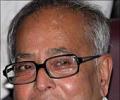
For the past one-and-a-half months, railway minister Mamata Banerjee has stopped her informal interactions with finance minister Pranab Mukherjee after a sharp exchange on telephone over a municipal election issue.

After the empowered group of ministers' meeting on the 3G spectrum auction, finance minister Pranab Mukherjee was surrounded by journalists.
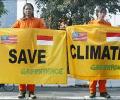
The divergent utterances by environment and forests minister Jairam Ramesh and prime minister's special envoy on climate change Shyam Saran have created a good deal of ambiguity within and outside the country over the government's strategy for these talks.

Like many other Indian companies, the Tata group too has globalised in the past decade. It is a testimony to the success of Indian enterprise in the global marketplace that many of them have done well, in the face of severe competition.

Big global pharmaceutical firms seeking to buy into prominent Indian generic players is, in fact, a vindication of the Indian pharmaceutical story which began with the decision by Indira Gandhi to rein in the cost of medicines and allow process and not product patents.

The IIMs will have to reinvent themselves considerably if they are to compete with top B-schools internationally - both in terms of their faculty as well as their curriculum.
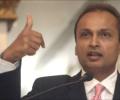
Whether it was the issue of the treasury stock (which came about when Reliance Industries Limited and Reliance Petroleum merged), or the dependent nature of so-called independent directors of RIL, or the opaque structuring of conflict-of-interest deals, Anil Ambani came out with guns blazing, accusing his older brother Mukesh of trying to diddle the shareholders of the company their father had built.

The rash of strikes and the killing of the HR head of Pricol exactly a year after Graziono Transmissioni's CEO was killed by sacked employees indicate a tough year ahead.
The salaries that Indian CEOs get is just about okay by international standards. But it is the promoters who take the biggest packages.

